Mariia Vladymyrova presents her work on Russian lawfare in the Arctic at the Law and Security Conference 2026 at the University of Copenhagen

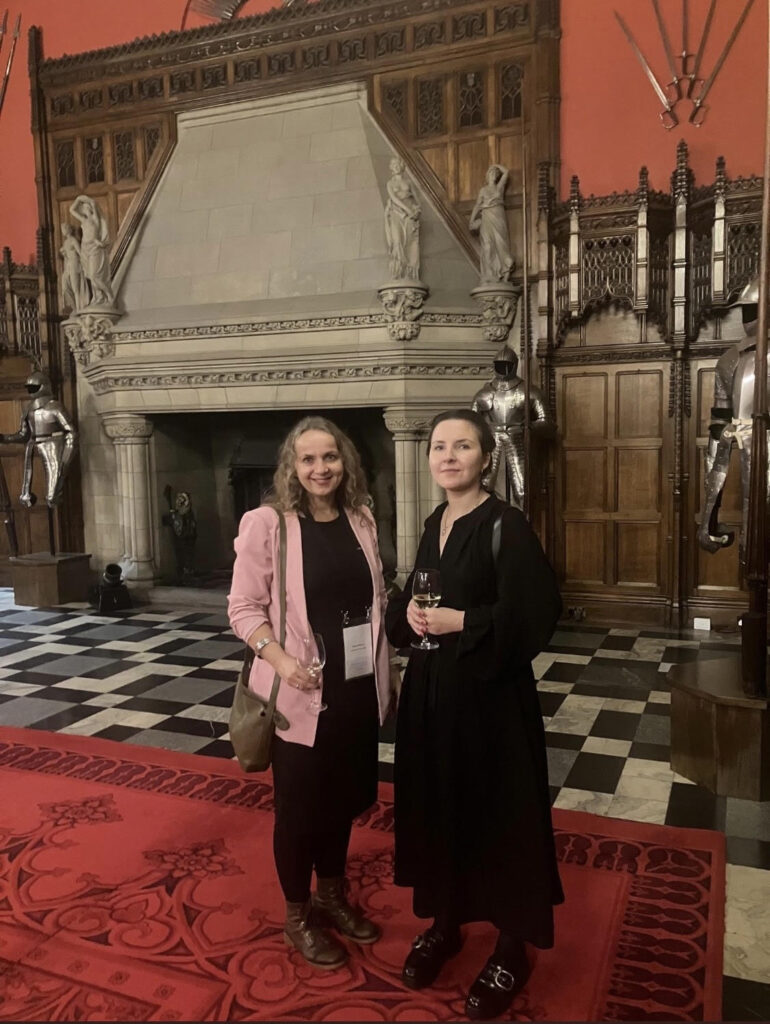
On 27 August Mariia Vladymyrova attended the PhD symposium within the framework of the Law and Security Conference at the Law Faculty, University of Copenhagen. She presented her recent study of the coercive signaling elements embedded in the Russian regime of the Northern Sea Route. This regime provides a framework through which Moscow asserts its dominance in the Arctic and signals resolve and commitment by introducing escalatory threshold without resorting to the overt hostility (and cost) of militarized threats.


Mariia Vladymyrova attends Kiel International Seapower Symposium

On 18–19 June, Mariia attended the Kiel International Seapower Symposium, “How to Defend Europe at the Northern Flank,” and contributed her insights into Russian deterrence activities at sea during the post-conference workshop. She introduced participants to the key findings of her ongoing research on the repertoire of Russian coercive tactics in the grey zone. In particular, her study of Russian lawfare in the High North spoke directly to one of the central questions the symposium posed: what is the opponent seeking to achieve?
The understanding of Russian seapower in the High North too often begins with an assessment of Western vulnerabilities. Yet legal frameworks can serve as early indicators of Russian strategic priorities and adaptation. Mariia urged workshop participants not to overlook their coercive dimension. A state’s legal practices, domestically and internationally, remain an important site deterrence signaling, and therefore should be embedded in NATO’s threat assessments accordingly.


Mariia Vladymyrova discusses Russian deterrence in the grey zone with ABC Nyheter (Oslo)

Earlier this month, Norway and the United Kingdom disclosed a weeks-long military mission to deter Russian submarines operating near undersea cables and pipelines north of the UK. These vessels reportedly mapping critical infrastructure in the North Atlantic.

But beyond the military threat, Moscow leans on civilian assets, too. Russian fishing fleets — which can still legally dock at a handful of Norwegian ports — participate in naval shadowing, intelligence-gathering, and potentially sabotage operations. In conversation with Sigurd Nordmo, Mariia shared a few takeaways from her recent research article, “Russian Fisheries in the High North: Deterrence in the Grey Zone,” published in the March issue of the RUSI Journal.

Mariia concludes that the employment of fishing fleets for signaling may not strengthen Russian deterrence posture in any direct, cause-and-effect sense. However, it does allow Moscow to minimise its own risk and cost while maximising adversary uncertainty and defensive expenditure. By making attribution difficult and keeping operational patterns ambiguous, these vessels contribute to Russia’s strategic advantages in constraining NATO’s posture: blurring maritime situational awareness, burden operations, and complicating both policy responses and threat-scenario building for Northern European NATO states. This is, in essence, an opportunistic strategy. But it provides Russia with escalatory flexibility — and it is important to recognise these patterns.

Read the full piece: The interview with Sigurd Nordmo is available at ABC Nyheter.

The comprehensive research on this issue: “Russian Fisheries in the High North: Deterrence in the Grey Zone,” open access in the March 2026 issue of the RUSI Journal.

Cameron Hunter explains the Golden Dome on Times Radio

Cameron Hunter appeared as an expert on Times Radio’s current affairs programme, “The Times at One with Tom Whipple”, to discuss the Trump administration’s Golden Dome initiative.

Dr Hunter provided historical context and strategic analysis, including potential Chinese and Russian perspectives.

The appearance is available to watch on YouTube by clicking this link.
Mariia Vladymyrova delivers a lecture at the U.S. Naval War College

Ritual Deterrence joins 2023 UK DAAA conference